
Recently a local Facebook page posted a poorly written and sourced article with the intention of showing support for Transgender Awareness week. I was surprised at the vitriol that ensued toward both the acknowledgement of the existence of transfolks and the idea of raising awareness of trans issues. There seemed to be a common consensus among many of the people posting that being trans is a symptom of mental illness.
I appreciate the folks who posted in support of trans people, to affirm the value we bring to society.
Reading the hateful statements had a major impact on me. I try to tell myself, “Haters gonna hate.” But the fact of the matter is, I believe we can do better. I think we ought to try.
I kept thinking, “If I am feeling this way while reading these comments, with all of my privilege and the support of my family and friends there may be someone out there reading these same comments without that support.” It hurts to write this post but I feel obligated by the emotional capital I get to retain because of my privilege.
Despite choosing not to engage directly with any of the people posting, I thought it might be helpful to share some of my perspective on what it means to be trans and why raising awareness is important. I hope you will challenge some of your perceptions in reading this. I am confident none of you reading this are the same people who are being so thoughtlessly cruel. But, in reading this perspective, I hope you feel better prepared to push back against hate when you have the opportunity.
In some instances I will write in response to things people actually say about trans people, just so we can be sure we know what we are talking about.
Logistics
First of all, it is important to understand that assigned sex, gender identity and gender expression are separate things.
Assigned sex – at birth, based on the genital appearance, a doctor typically declares a child is male (penis) or female (vulva and clitoris). Many people refer to this as “biological sex,” but this infers some level of precision that is usually not present. Sometimes a child’s sex assignment also takes chromosomes into account. An assumption is made that the child will develop secondary sex characteristics that align with this declaration of sex as we understand it. There is also an assumption made that the internal organs fall into categories that are exclusively ‘male’ or ‘female.’ So, females are expected to have a uterus, Fallopian tubes, ovaries and a vagina. The variations are in fact on a spectrum. Nature does interesting and unexpected things all the time.
Think about variations in breast size and facial hair among people. That same amount of variation happens on the inside too.
We tend to think that because our genitals look a certain way, we are confined to developing along a certain trajectory. Such that persons assigned female at birth will grow to be women and persons assigned male at birth will grow to be men. People believe this because it happens all the time! But that doesn’t mean that is the only thing that can happen.
The concept of “men” and “women,” known as “gender,” actually describes the behaviors you are expected to engage in. Gender varies by culture in the number of genders recognized and the expectations associated with them. Gender is associated with assigned sex. People come to understand the roles associated with their gender through media, family, environment and society.
Side note: When someone’s gender aligns with their sex, they are cisgender. That’s a fancy word! … “cis” just means “on this side of” as “trans” means “across.”
So unless someone lives in a totally effed up environment, they should arrive in adulthood as the men or women we predicted them to be based on their genitals? Not quite.
I personally do not feel the need to validate my identity with science, but, for those of you who do, several studies are showing that the brain structure and function of trans people are more similar to the gender they identify as, than the sex they were assigned at birth. Here is a brief video (skip ahead to 1:50 if you don’t need a chromosome review) on a complex topic: https://www.youtube.com/watch?v=MitqjSYtwrQ
“We shouldn’t let children question their gender.”
Here’s the thing, if not for tremendous societal pressure, I would have never questioned my gender. I always knew I was a boy – the only confusing part was that I was told I was a girl and I was expected to be a girl. So, if you don’t want children to question their gender, stop trying to convince them that you know them better than they know themselves.
Trans children exist regardless of how you feel about it. You can try to convince them they are not trans but this will result in either them hating themselves or everyone else. I can’t be cisgender just like I can’t be left handed. I could practice using my left hand but will never be my dominant hand. It is not how my brain works. If you insist I use my left hand, it just feels terrible and weird and prevents me from reaching my full potential, it doesn’t change the fact that I am right handed.
“Being trans is a mental illness and people need to get over it.”
First and foremost, “get over it” is not a recommended treatment for any health issue, mental, medical or otherwise. Second, being trans is not a mental illness, but I can understand the confusion.
Trans people experience serious mental health issues at a higher rate than the general population. In fact, 48% of trans adults report contemplating suicide in the last 12 months, compared to 4% of the general population. Why might that be?
It turns out that constant messaging that the person you know yourself to be does not and cannot exist is harmful. It turns out that people who desperately cling to their high school health class as the be all end all of sex and gender information completely reject trans folks, threatening them with violence, with job insecurity, outing them, and dismissing their basic validity causes intense anxiety for trans people.
All human beings need safety and a sense of belonging for mental wellness as much as they need food and exercise for physical wellness. Society ostracizing trans people is the reason so many of us struggle with our mental health. Mental illness is not inherent in being trans.
Among trans teenagers, suicide rates drop to the statistical average when parents support their children.
“What about the health risks????”
The biggest health risk to trans folks is suicide and the only proven treatment is transitioning so that sexual characteristics match a person’s gender. You know what would benefit everyone’s health? An inclusive society where people have a healthy sense of self and community.
“But testosterone can raise your risk for heart disease!” Yes. To the level of risk it would be if I were a cisgender male.
Just because something may impact my health doesn’t mean that someone else gets to make the choice for me. I am eating a chocolate bar right now, it is negatively impacting my health. But that is a choice I am making and it doesn’t impact you.
You know what else testosterone does? It allows me to look in the mirror and make eye contact with my reflection. It allows me to hear my own voice as it should be.
Other health benefits? My lack of breast tissue reduces my risk of breast cancer to that of a cis male. I can’t get uterine or cervical cancer because I have neither. I also can’t get prostate cancer. So…chill.
“What if you change your mind???”
People who transition have given this a lot of thought. There is no illusion regarding the permanency of this decision.
There are a handful of examples of people who have “de-transitioned” and they have gotten a lot of press. People point to these stories and say, “See! You are totally going to regret this.” However, I think it is a great disservice to categorize the decision to de-transition as, “changing your mind.” Some folks regret transitioning because they are still unable to find acceptance. Some folks are unable to medically transition as they desire due to financial constraints or issues of access and they revert back to the closet because it is just too hard. There are people who may identify as transgender and then realize that that identity does not in fact fit. But I think we would find that people would be much less likely to cling to an identity that doesn’t suit them if they knew that no matter what, they are loved and accepted.
Besides – personal choice. Free will. None of your damn business. We are all entitled to regret things. You know what I regret? Not accepting myself sooner. I have an amazing life and I wouldn’t trade it for the world but I missed out on a lot. And the years of non-acceptance have acclimated my brain to a certain level of constant stress that now feels normal.
“Barely anyone is trans so no one should have to talk about it.”
The Williams Institute estimates that .6% of adults in the US identify as transgender. Due to stigma and a lack of reliable and complete information, this is likely an under estimate. And, there are people who are trans that are not out, even to themselves and are not included here. But even if this were a comprehensive estimate, we are talking about 1.4 million people.
Is that a lot of people? Well, of 100,000 adults, 600 are transgender. That is 4.7 times the rate of women who will be diagnosed with breast cancer this year. But despite the fact that lung cancer kills 25,000 more women each year than breast cancer, I don’t hear anyone complaining about breast cancer awareness.
Parting Thought
I had the honor of spending some quality time around youth who are claiming their identities early in life. I am aware of how different the world was when I was their age, when my knowledge of being anything other than a heterosexual cis female was Ellen DeGeneres, Melissa Etheridge and that single guy down the street with the teddy bear in his window. Adults warned us to stay away from him. He was “probably gay and trying to lure children.”
So I asked them, “What does it mean to you to be young and queer?”
There were words of oppression and fear but the concept that stood out so clearly to me, was the sense of community they have found in one another. Through their radical self acceptance they have the potential to teach the world so much.
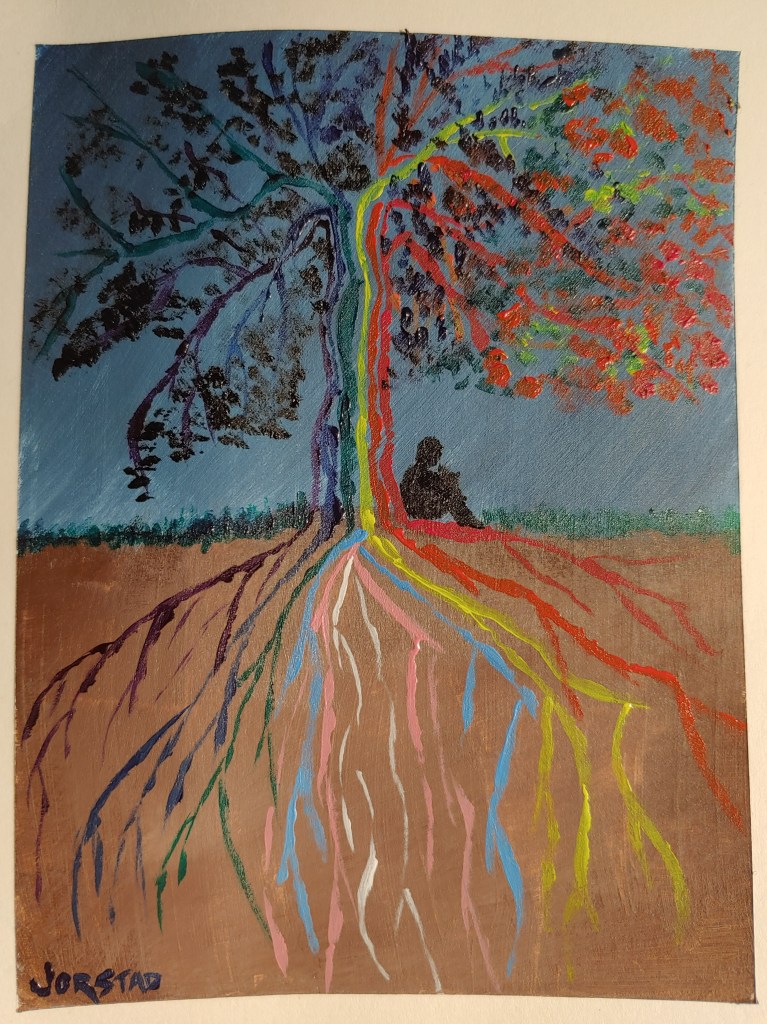
 That's Mr. Gender to You
That’s a well written, informative and beautiful post! Thank you.
LikeLike